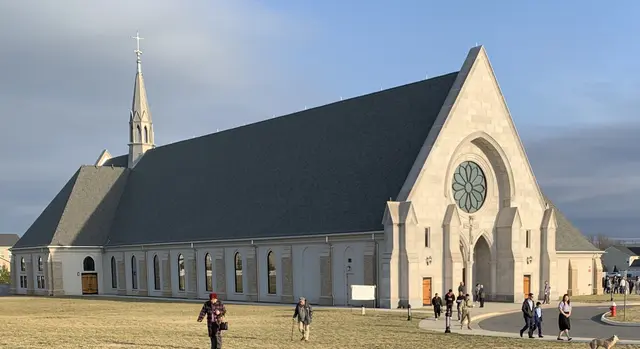
2025 was a Jubilee year for the Catholic church. The bishop of my diocese suggested that a good way to celebrate the jubilee would be to visit eight designated pilgrimage churches throughout the diocese. As of October 7, I completed the Holy Year Tour (54 days before the end of the church year)! Continue reading to see what I learned from this adventure.
What is a Jubilee Year?
A Jubilee Year is a special year of remission of sins, debts, and universal pardon. Periodic celebration of a jubilee year was a Jewish tradition inherited by the Church. In Catholicism, Jubilee Years (also known as Holy Years) have been celebrated since 1300. Since 1470, they have been celebrated every 25 years. The Jubilee Year is typically celebrated with a pilgrimage to Rome, but can also be celebrated by visiting specially designated local churches. Wikipedia has a good article that describes in great detail the history of Jubilee years.
Bishops in the Catholic church lead a diocese, which is a group of churches within a geographical region. My local bishop designated eight churches spread across the diocese as pilgrimage churches. He also designated a “Holy Year Tour”, which consisted of visiting all eight churches. As a retired engineer with lots of free time, I accepted this challenge.
Where and When?
The 2025 Jubilee Year started on the first day of Advent in late 20241. I was visiting Vietnam at this time.
I assumed that the 2025 Jubilee would end on the first day of Advent in late 2025. However, it actually ended on Epiphany which is January 6 2026. So the actual Jubilee year was six weeks longer than a calendar year. Pretty helpful for those running late on their eight church pilgrimage! Fortunately I did not need to use this “grace period” to complete the pilgirmate.
The table below lists when I visited each Jubilee church.
| Name | Date Visited | Comment |
|---|---|---|
| Our Lady of Hope Catholic Church | 2025-02-06 Thu | Adoration |
| Corpus Christi Catholic Church | 2025-03-15 Sat | Vigil mass |
| St John the Evangelist Warrenton VA | 2025-06-14 Sat | Vigil mass |
| St Thomas More Cathedral | 2025-07-21 Mon | Daily noon mass |
| St John Bosco Catholic Church | 2025-09-17 Wed | Adoration |
| St Paul’s Mission Church | 2025-10-02 Thu | Pray |
| St Patrick | 2025-10-03 Fri | Adoration |
| Basilica of St Mary | 2025-10-07 Tue | Daily noon mass |
Churches of the Holy Year Tour
Our Lady of Hope (2025/02/06)
My first pilgrimage church was Our Lady of Hope, located in Potomac Falls, VA. Visiting this beautiful church was “low-hanging fruit”, as I have been there several times before. The parish was founded in 2000 (split from Christ the Redeemer parish), initially meeting in a local high school. The church was built in 2006.
It snowed during my visit, but that did not prevent me from stopping at the nearby Costco food court for lunch on the drive home ;))
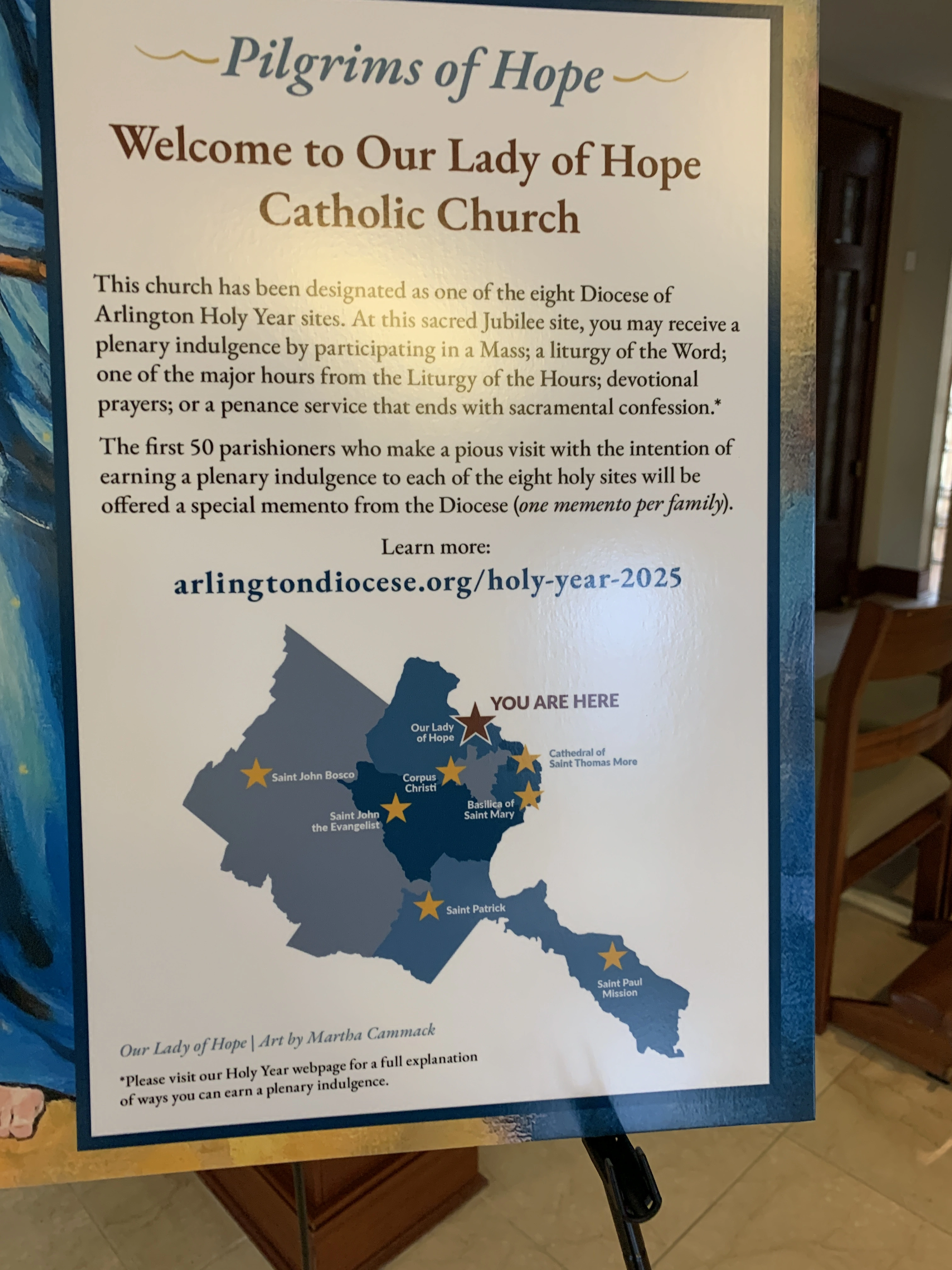
Poster for Jubilee Tour
Each Jubilee church has a poster that describes the 2025 Jubilee Tour and allows participants to scan a QR code to record the visit with the Diocese. I managed to find the posters at about half of the churches. Note that the Our Lady of Hope poster was missing the QR code – not sure why.
Corpus Christi (2025/03/13)
The second pilgrimage church I visited was Corpus Christi, located in Aldi, VA. This parish was founded in 2014, and also celebrated mass in a local high school until 2021 when the church building was completed.
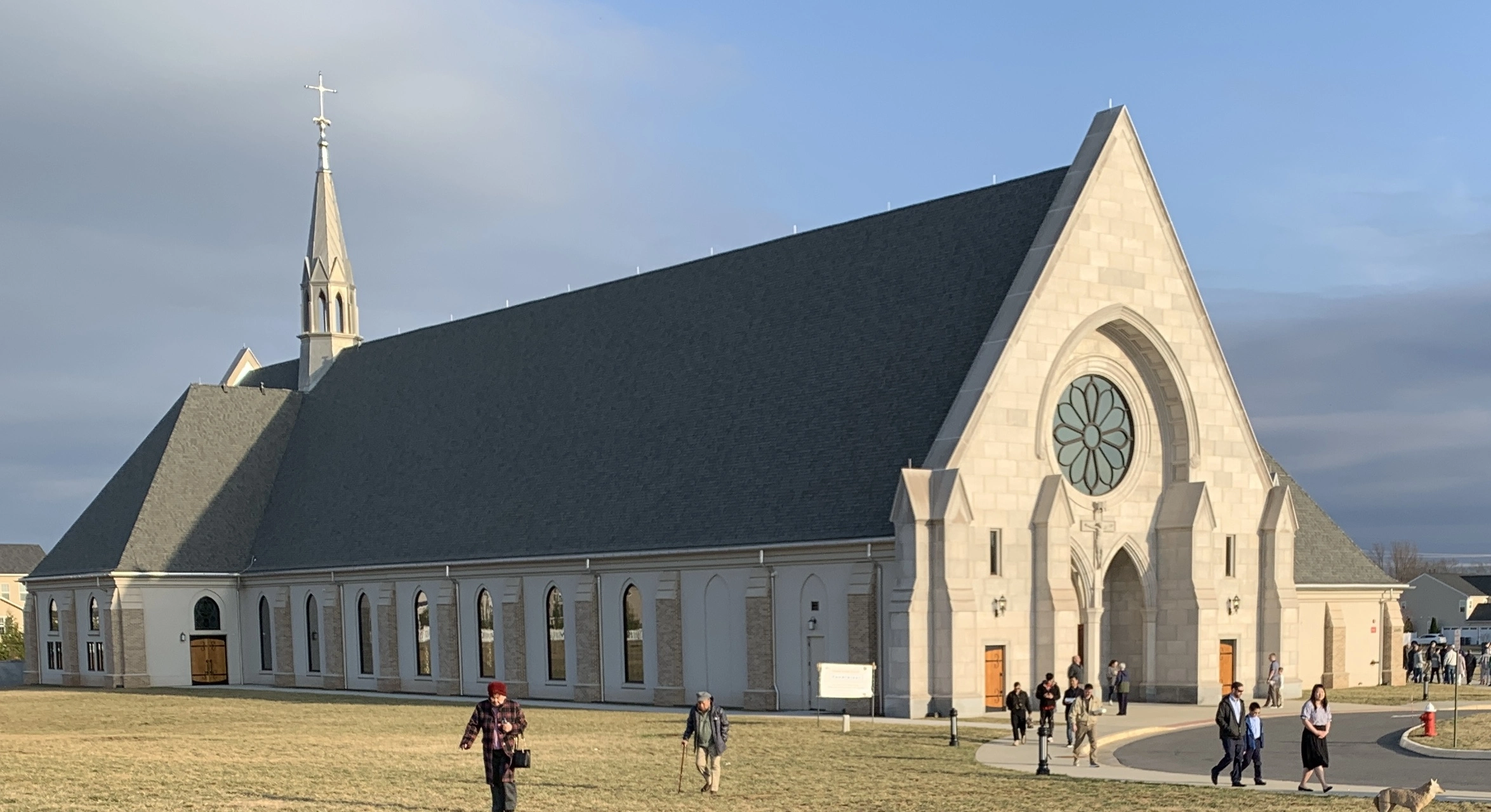
Corpus Christi Church Exterior
This church reminded me of a small European Gothic cathedral. Similar to Our Lady of Hope, this church is built in a cruciform shape (i.e. in the shape of a cross, with the altar located in the center of the cross).
St John the Evangelist (2025/06/14)
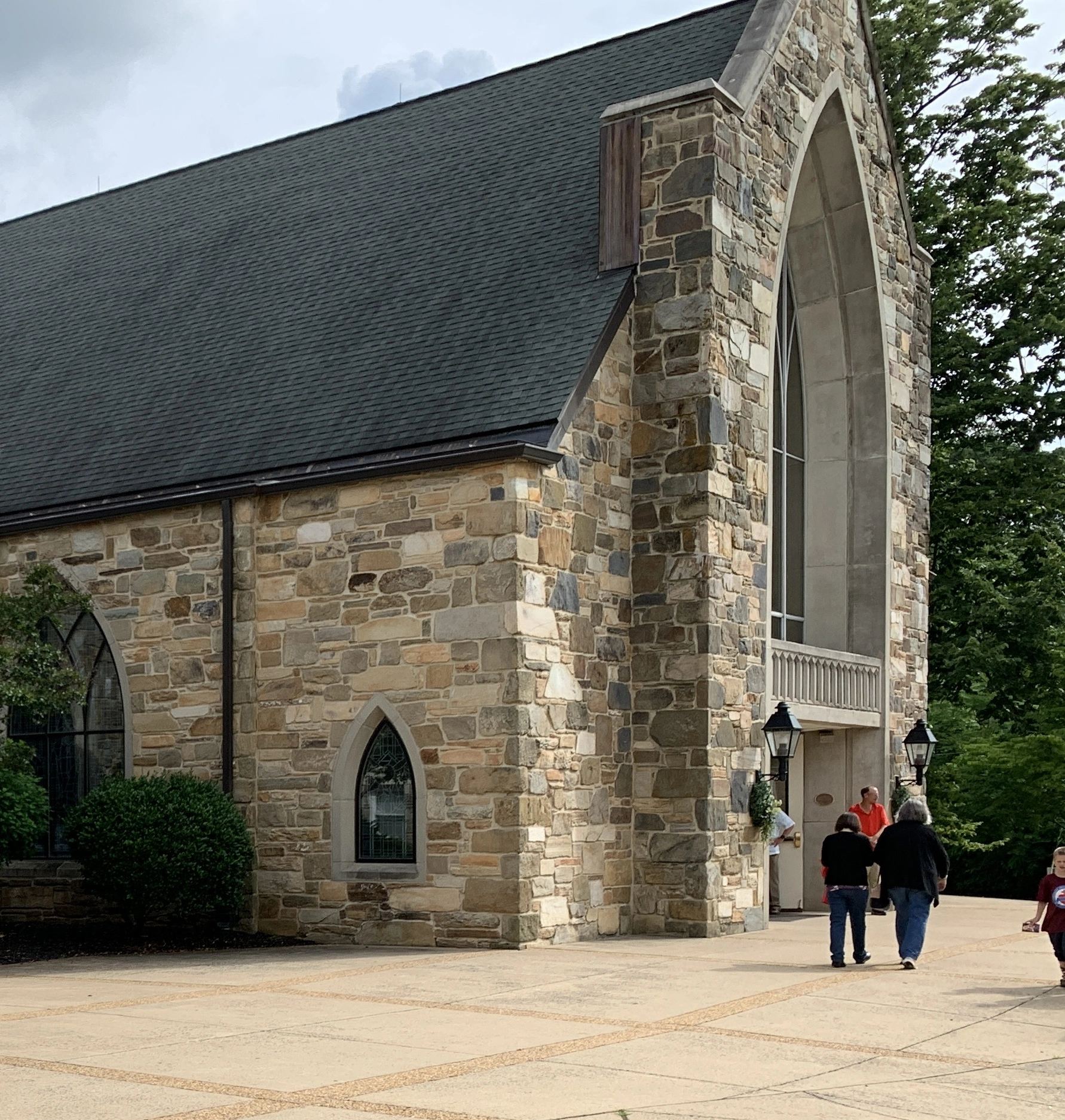
St John the Evangelist Church Exterior
After a three month break, I visited St John the Evangelist in Warrenton VA. This parish was founded in 1860! The current church sits on a hill overlooking the town, and was completed in 1964. The area has a very different vibe from the previous two churches – located in what I would consider the “countryside”. A beautiful area and a beautiful church!
St Thomas More Cathedral (2025/07/21)
St Thomas More is the cathedral2 for the Arlington Diocese. It’s parish was founded in 1938. The original church was built in 1942 and now serves as part of the church school. A newer church was built in 1961, and was renovated in 2015. Additional renovations were completed last year.
I was anxious to visit the cathedral to see the new renovations. Despite it’s history, it looks very new, modern and quite beautiful. It was fun to attend a daily noontime mass at the cathedral as this was much more informal than a normal mass there.
I stopped at Eden Center for lunch after mass.
St John Bosco (2025/09/17)
The fifth pilgrimage church I visited was St John Bosco, located in Woodstock (near Skyline Drive). I was looking forward to seeing the mountains and fall leaves during the drive to this church, but rain poured from the sky during the entire drive there and back. The church itself was quite nice. The original church was built in 1888, with the current church being completed in 1973. The church grounds had several buildings that all looked like churches, so was a bit difficult to figure out which was the “real” church building.
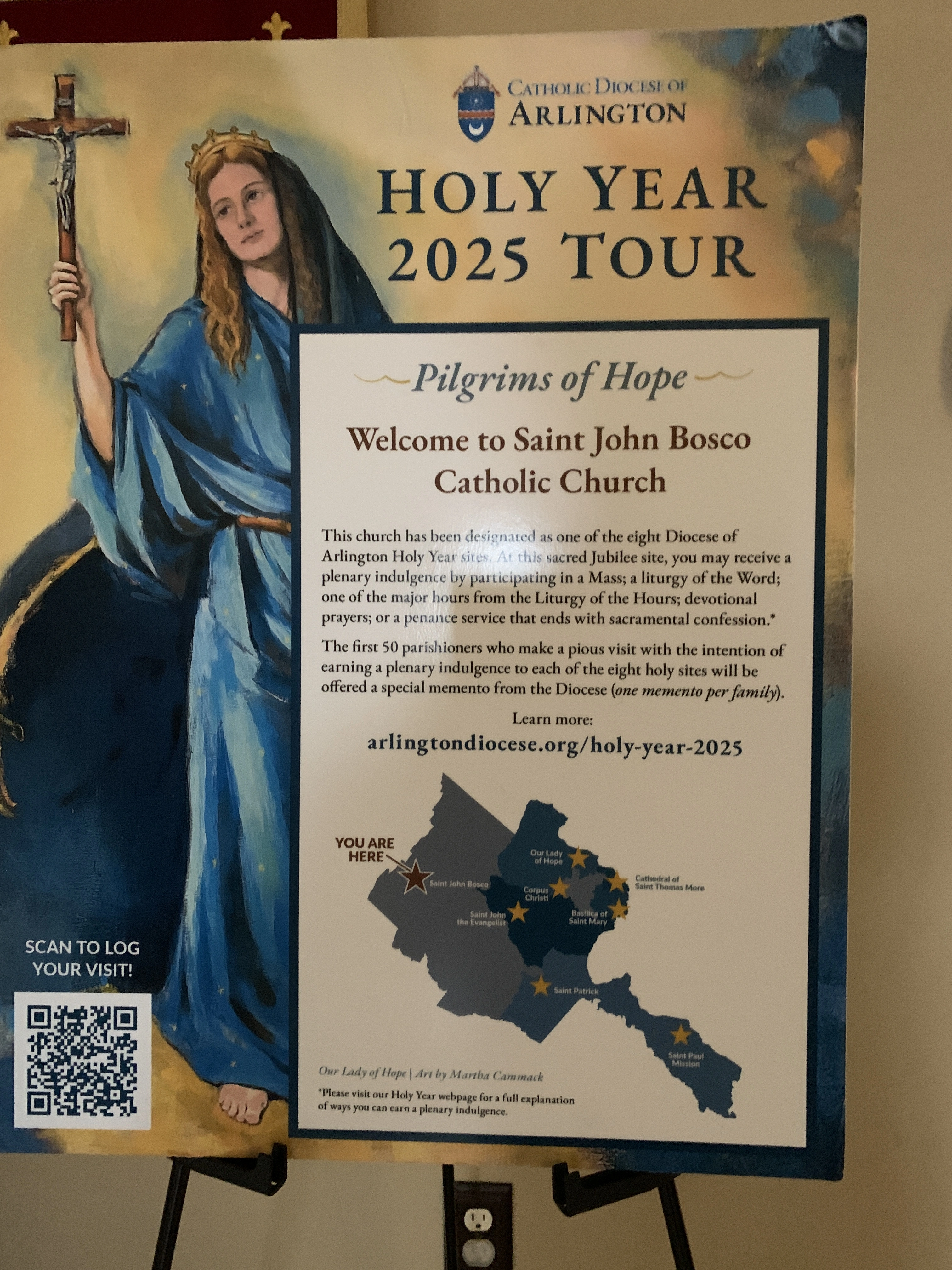
St John Bosco Jubilee Poster
After visiting the church, I ate lunch at a Seafood Buffet on the way home.
St Paul’s Mission (2025/10/02)
St Paul’s Mission is located in Hague, VA. This region of Virginia is rural, peaceful, and very beautiful. To get there, I initially drive on major highways, then smaller highways, then roads, then smaller roads, and finally on an unpaved road.
Arriving at the church, I saw a building that looked like a rectory (home where priests live), but did not see a church. I got out, walked around the grounds, but didn’t see anyone, no cars parked there at all. Where was the church? I got back in the car and drove further down the dirt road, and saw a beautiful, new-looking small church sitting alone in an empty field. It had a parking lot but no cars. I decided that even if I couldn’t enter the church, at least I would walk around the grounds (I had driven far to get there!). But I tried the door and it was open, so I went inside and prayed for awhile. It is a beautiful church, and looked like it had been recently built. I stayed for about and hour then left, never seeing anyone (not even a parked car) at the church.
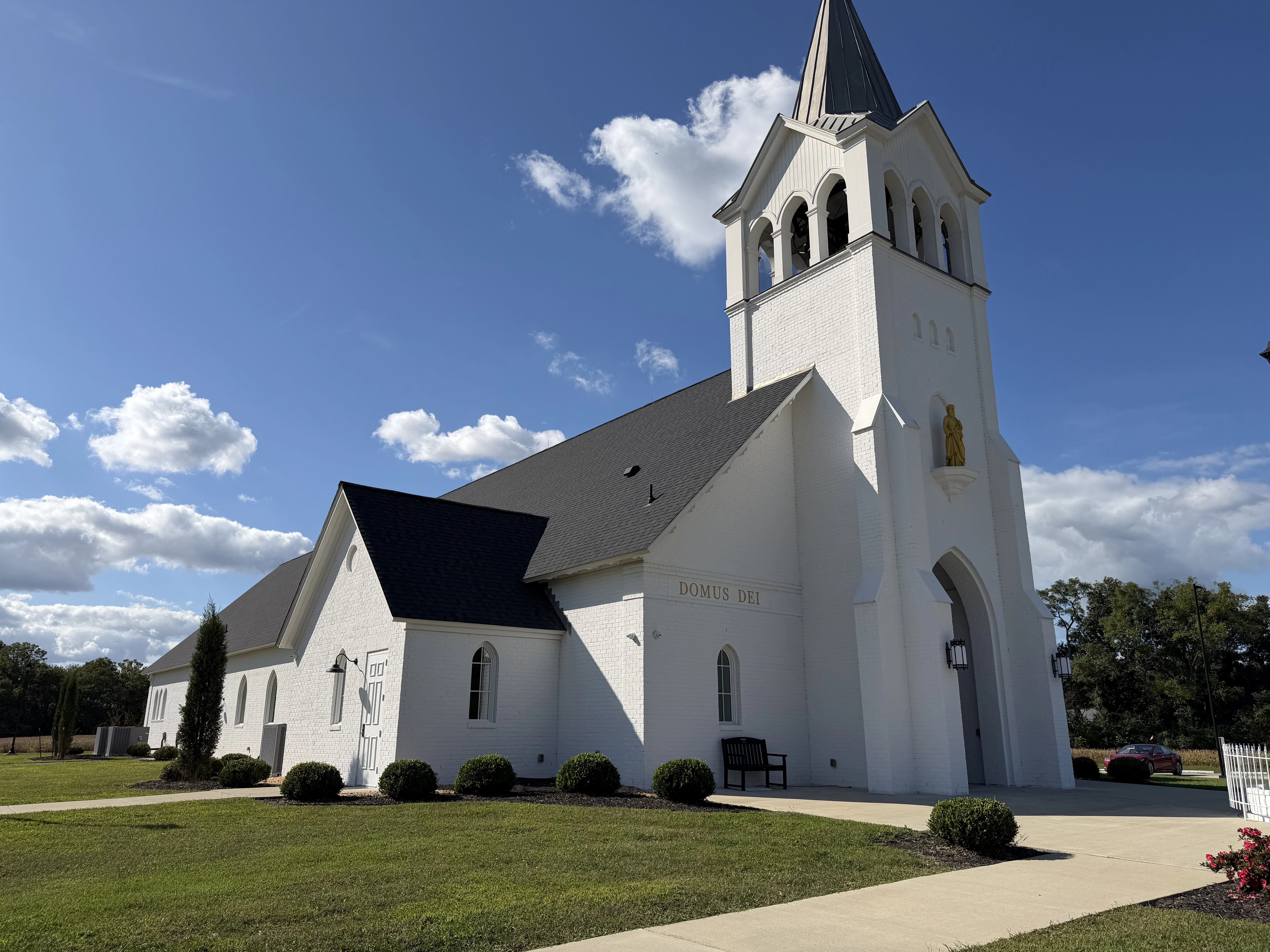
Exterior of St Paul Church
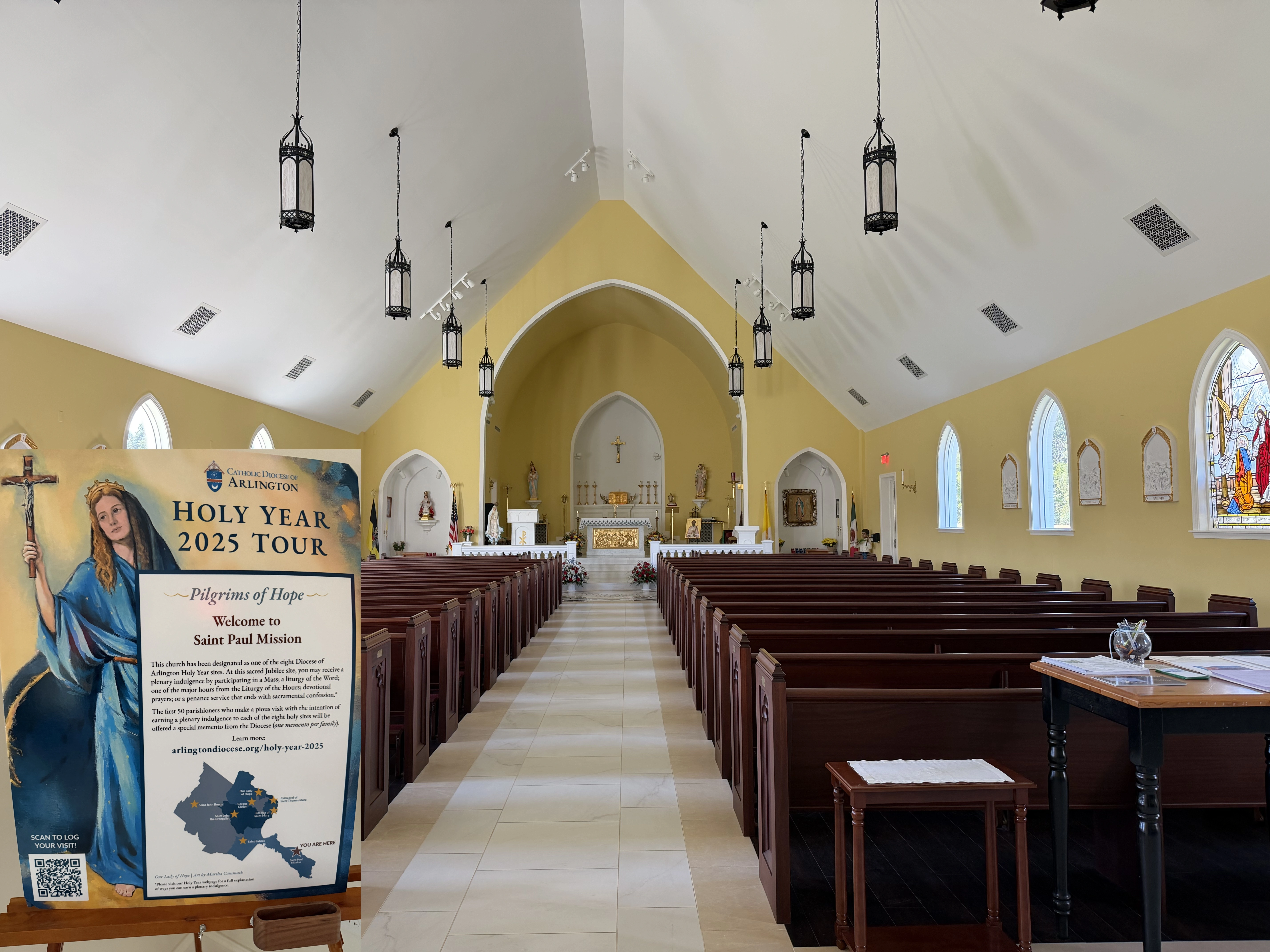
Interior of St Paul Church
Because St Paul and St Patrick where fairly far from my home, I decided to stay overnight in a hotel in the modern part of Fredericksburg. What a lively town Fredericksburg is! I stayed near Mary Washington college, so there were lots of students, lots of traffic – a really bustling area. I ate dinner at a Mexican restaurant near the hotel that was celebrating its grand opening with live music (the band was going from table to table playing music – I quickly finished eating so I could escape before they got to my table).
St Patrick (2025/10/03)
St Patrick church is located in Fredericksburg, VA. The parish was founded in 1983, and the church building was completed in 2021. The church is located near (in?) the Chancellorsville Civil War battlefield. In fact, I passed Civil War era cannons on the drive to the church.
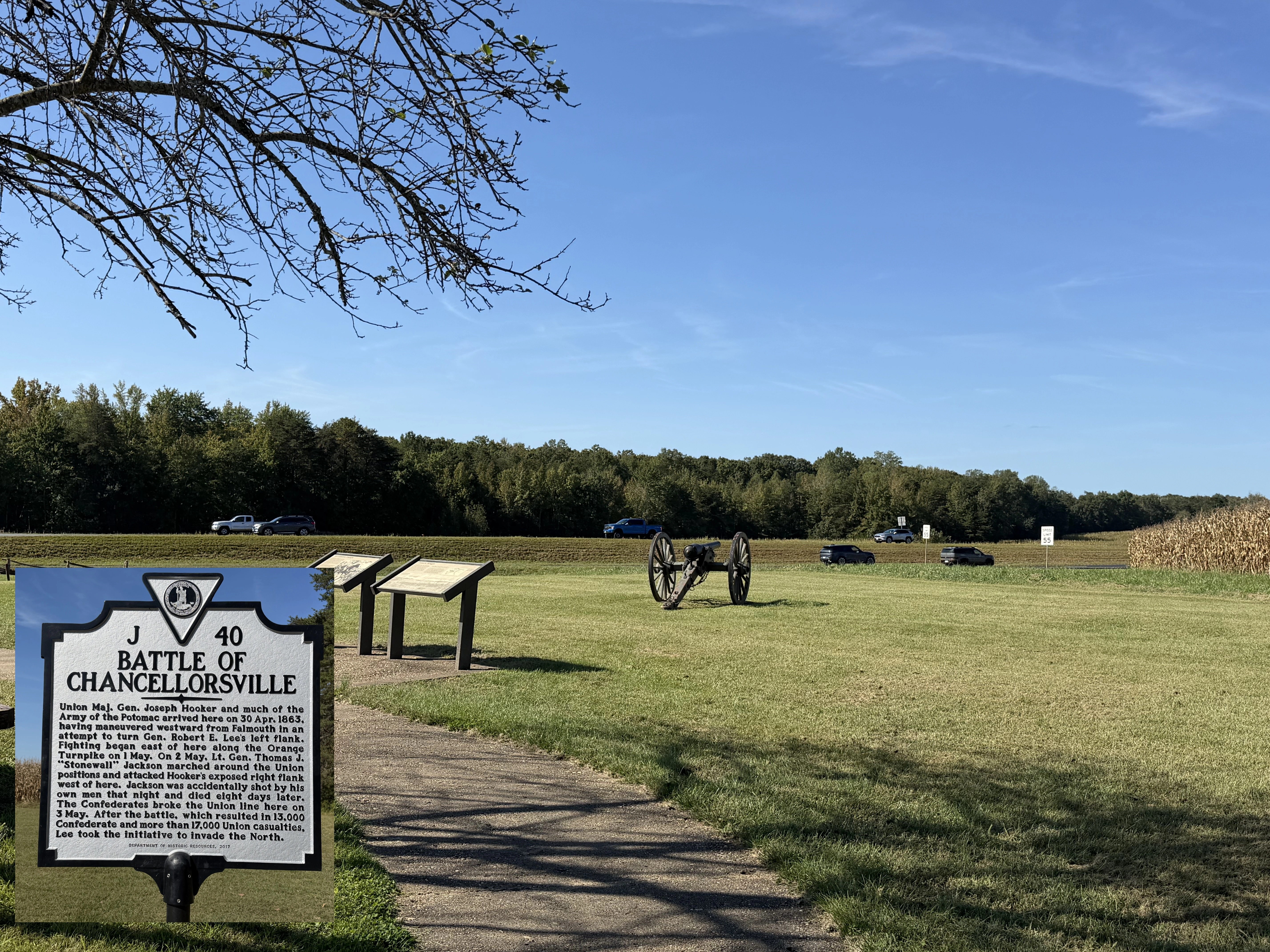
Civil War Battlefield near St. Patrick's Church
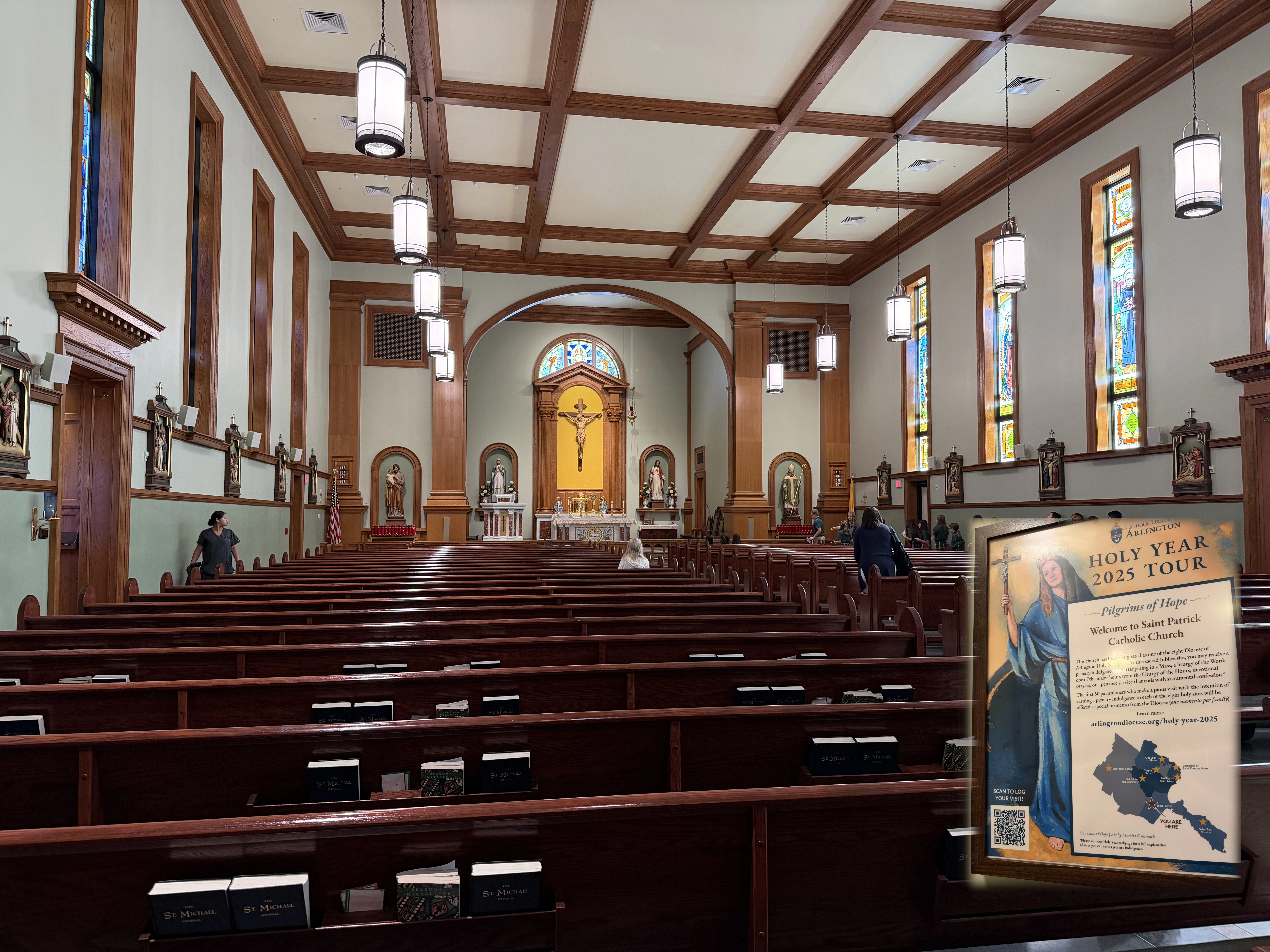
Interior of St Patrick Church
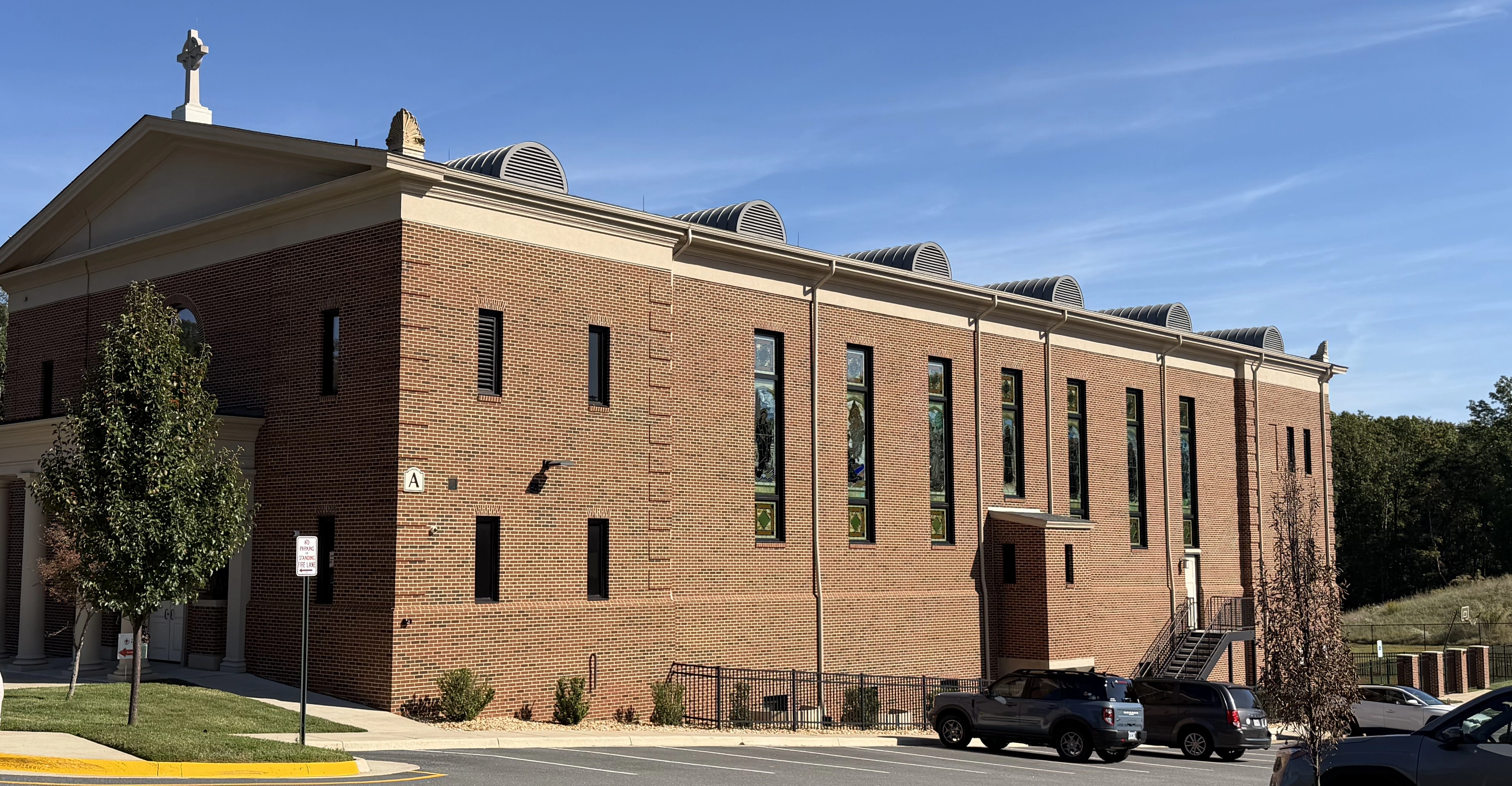
Exterior of St Patrick Church
Fredericksburg is a town filled with history, mostly due to the Civil War battles that occurred nearby. But it is also a modern town located off an I-95 exit, with lots of traffic lights and every fast food, restaurant, and store imaginable – all within about two miles of each other. Very impressive!
Basilica of St Mary (2025/10/07)
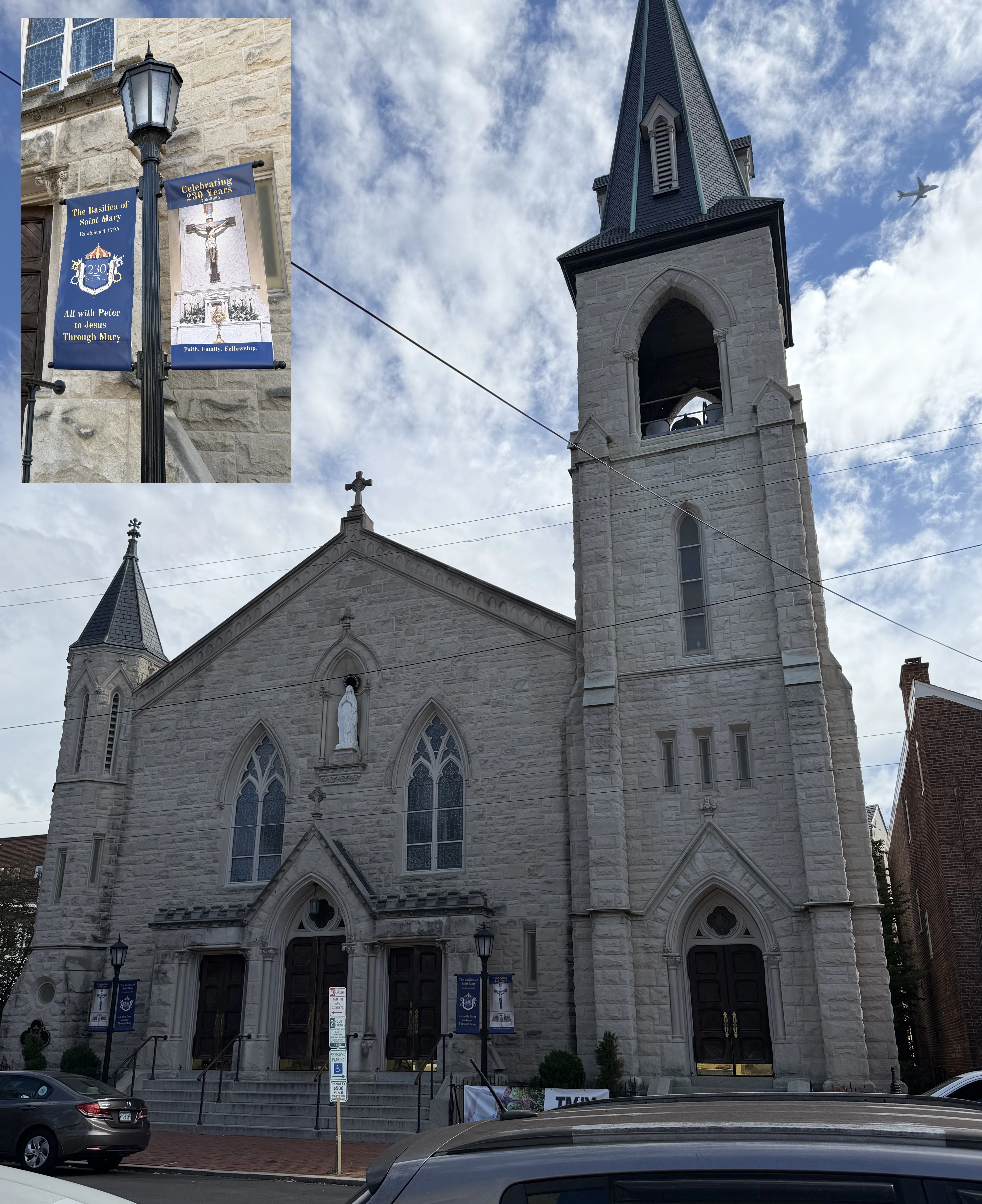
Basilica Entrance
The Basilica of St. Mary is located in downtown Alexandria, VA. This church was founded in 1795 and is the oldest Catholic church in Virginia. The first church building was located near Jones Point, with the parish moving to its current location in 1810. Apparently George Washington donated funds towards building the original church. Being a Catholic was illegal in Virginia until 1776, when the newly formed US declared independence from England and instituted freedom of religion3.
I attended weekday noon mass. I was a bit concerned about parking in Alexandria during a workday, but parking at the basilica was surprisingly easy – there is a parking lot located across the street from the entrance, which had ample parking when I visited.
So what is the difference between a church and a basilica? A basilica is not the biggest, nicest, or best church. Rather, it is a church with “special significance”. St. Mary’s was recently named a minor basilica by Pope Francis, one of only 85 minor basilicas in the entire US.
A basilica has some unique features that distinguish it from a standard church. For instance, if you zoom into the picture below you will see a red and yellow triangular umbrella to the right of the altar. This is called an “ombrellino” (“umbrella” in Latin) and symbolizes the authority of the pope over the church. Each basilica in the world has an ombrellino. When the pope visits, the ombrellino is opened4.
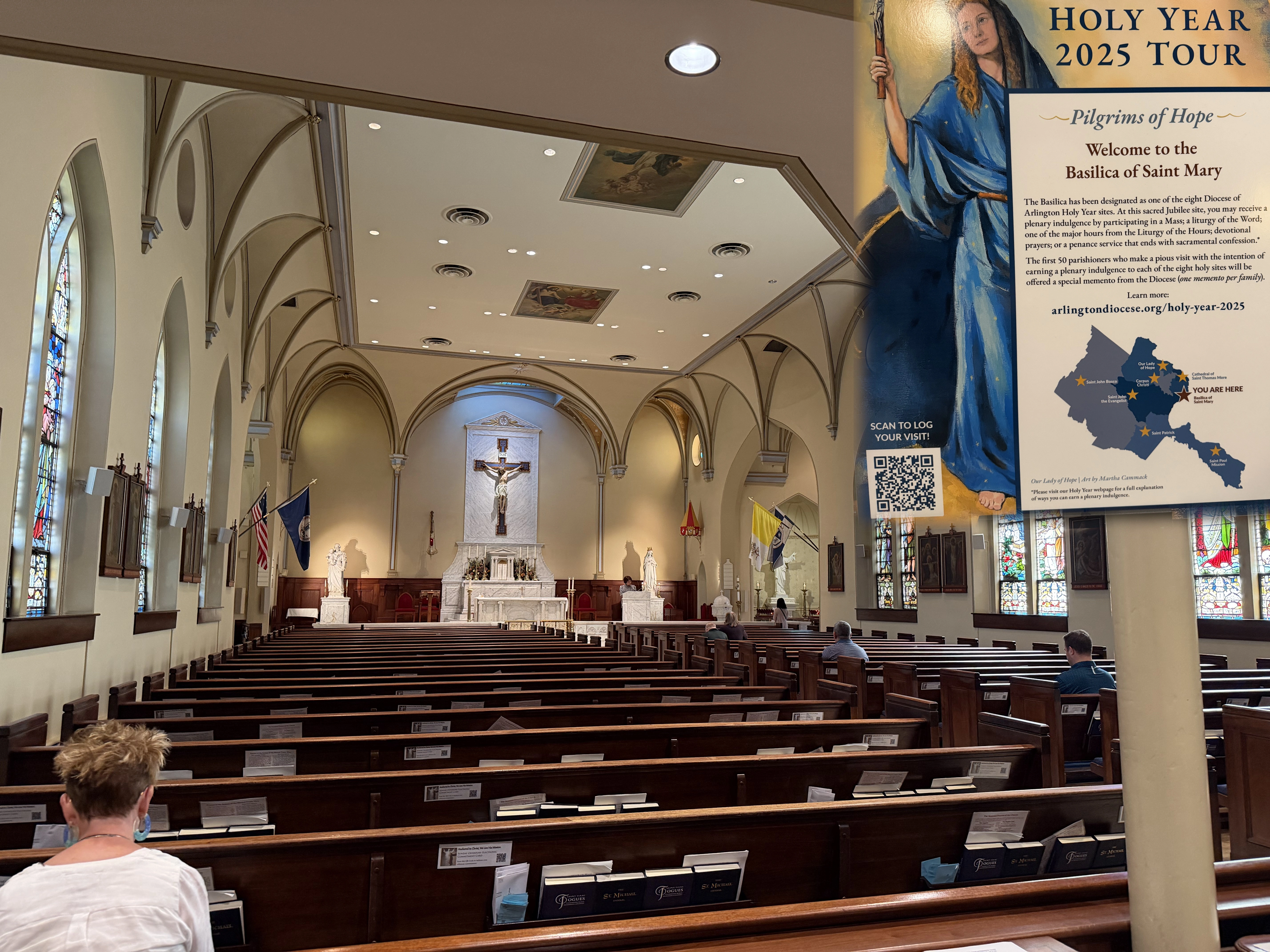
Basilica Interior
With my visit to St. Mary’s Basilica, I completed my 2025 Jubilee Pilgrimage!
Takeaways
The Spiritual Side of Pilgrimage
Visiting 8 churches during the Jubilee started out as an exercise in planning and logistics. It evolved into a spiritual experience.
Can’t you pray anywhere? Of course you can! But there is something special about disrupting your daily routine, going somewhere different, seeing new places, new people, and having new experiences. Changing your routine, getting out of your comfort zone, can help you hear the voice of God more clearly.
There is something special about putting in extra effort – driving three hours to visit a church as opposed to my normal very short drive to mass. And risking a flat tire while driving on a dirt road to visit an apparently unoccupied church in Hague, VA definitely tested my faith.
The effort my pilgrimage required was nothing compared to the effort of those who traveled to Rome for the first Jubilee pilgrimage in 1400 AD. But still, I did put in extra effort to complete this pilgrimage and felt a solidarity with all the other pilgrims who went before me, even if my efforts were puny compared to theirs.
It is fairly easy to feel like a member of your own local church5. One thing I love about the Catholic church is being part of a worldwide movement with 2000 years of history. Visiting churches throughout my diocese gave me a much better sense of belonging to my diocese, not just to my local parish. In other words, I feel more a part of the universal church after completing this pilgrimage.
This sense of connection to the wider church is important. American’s tend to be self-focused (“it’s me and God – I don’t need the church!”). Learning a bit about the lives, varying needs and history of the people at each church I visited helped me move away from my self-focused view.
Did I try to earn God’s favor by going on a pilgrimage? Not at all! But I do believe that doing this pilgrimage drew me closer to Him, and helped to deepen my spiritual life.
My Diocese is big, with lots of new churches!
It became clear to me during this pilgrimage that my diocese is very blessed. Unlike many Catholic dioceses, my diocese is growing as evidenced by the many new or recently remodeled churches I visited. Interestingly, many of these new churches reuse items (statues, altar, pews, etc) from closed churches in other dioceses. A form of spiritual recycling? These reused objects connect the past with the present, the old with the new.
I also learned that my diocese has an abundance of priests. Many of the churches I visited have two (or more) priests. This is a real blessing compared to many dioceses where a single priest serves multiple churches.
So, why is my diocese growing when others are shrinking?
- Good, strong, faithful leadership. Our bishop makes an effort to communicate (newspaper, podcasts, emails, website), helping to keep members connected to the diocese.
- Growing area. The northern VA area has grown tremendously over the past 50 years, and this is reflected in the growth of the church.
- Lots of immigrants. I am impressed and pleased by the variety of people attending Catholic churches. Immigrants provide a vitality with new traditions and approaches to worship. My diocese would be less without them.
- God’s blessing.
I am a Procrastinator
Despite being retired, I am and always will be an Engineer. When given data, I always start to analyze it. Let’s analyze the dates when I visited each church.
I attended four of the eight churches over 10 months, and the remaining four churches over one month. I was panicking because I thought the Jubilee ended at the end of November (I didn’t realize until later that the Jubilee lasted until January 6th).
Hmmm… Looks like I worked hard to meet the deadline after a lot of procrastination. Yup, that sounds like the way that I typically do things.
Conclusion
I am very glad that I did the 2025 Jubilee Tour! It was a great experience. In fact, it was such a good experience that I decided to continue Jubilee “pilgrimaging” (is that a word?) by traveling to Rome in late October / early November (I was still thinking the Jubilee would end late November).
Recall at the beginning of this post I stated that Jubilee’s occur every 25 years? If I’m still alive in 25 years, I certainly don’t expect to be healthy enough to travel. Pope Leo, however, hinted before closing the Jubilee Year that the next Jubilee will be in 2033 (a mere eight years from now). Why 2033? Put your guesses in the comments below!
Stay tuned for a blog post on my fall 2025 Jubilee trip to Rome, Assisi and Amalfi.
-
The first day of Advent begins a new church year. Advent always starts on the fourth Sunday before Christmas even (which not conincidentally is why an Advent wreath have four candles). In 2024, the first day of Advent was Sunday, December 1, 2024. ↩︎
-
A cathedral is the “bishop’s church” within a diocese. The bishop’s cathedra (chair) is located in the cathedral, and represents the bishop’s apostolic authority as a successor to the apostles. In addition to hosting the bishop’s seat (metaphorically and physically), it is also a functioning parish with members, groups, parishioners, and assigned priests. ↩︎
-
Parish history taken from Diocese of Arlington website. ↩︎
-
If you don’t feel like a member of your local church, get involved beyond attending Sunday mass, start meeting people, and soon you’ll begin to feel a connection. ↩︎